

Follow the money.
Check the record.
Original calculations and practical guides to public spending. Each article connects a real question to primary sources and a worksheet you can use.
Explore all 50 states ↗Read the record, one question at a time.
10 guides & original analyses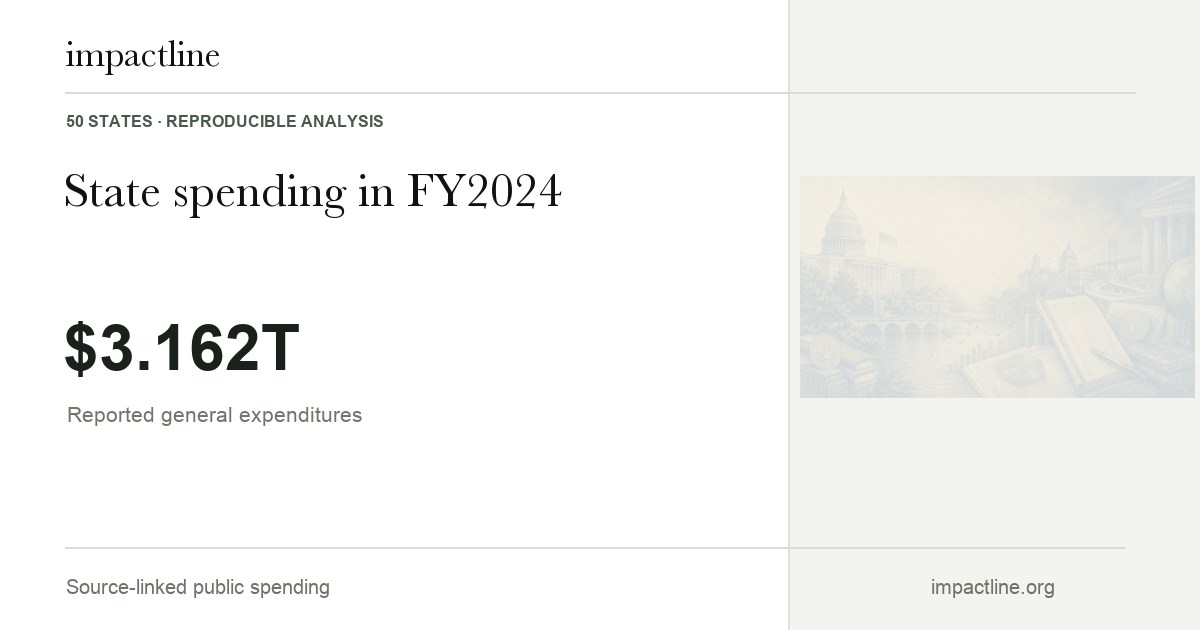
Explore the $3.162 trillion Census general-expenditure total, the largest state ledgers, and the accounting limits behind a fair 50-state comparison.
Read the Fieldnote ↗
Follow transfers between governments before adding spending totals. Use a flow worksheet to separate funding sources from final expenditure.
Read the Fieldnote ↗
Distinguish annual pension contributions, benefit payments, pension expense and net pension liability. Use a worksheet to compare dates and measures.
Read the Fieldnote ↗
Compare school spending using matching expenditure definitions, enrollment and years. Separate current operations, capital costs and funding sources.
Read the Fieldnote ↗
Understand Medicaid totals, matching funds and managed care payments. Use a worksheet to compare the same period, funding share and spending scope.
Read the Fieldnote ↗
Read audit scope, evidence, findings and corrective actions. Use a finding worksheet to distinguish control weaknesses, improper payments and fraud.
Read the Fieldnote ↗
Separate proposed, enacted, revised and actual state spending. Use a comparison worksheet to match funds, fiscal periods and accounting measures.
Read the Fieldnote ↗
A reusable evidence worksheet connecting authority, awards, payments, delivered outputs and outcomes without turning missing records into fraud claims.
Read the Fieldnote ↗
Texas’s $321.3 billion budget spans two years. California’s $297.9 billion agreement spans one. Use the period calculator before comparing them.
Read the Fieldnote ↗
Reproduce Treasury’s FY2025 deficit from the correct year-to-date row, and learn which spending totals can be compared.
Read the Fieldnote ↗Automated data processing and AI-assisted explanatory writing are disclosed. Follow the primary sources to verify each measure. A spending total or missing record does not establish fraud.